

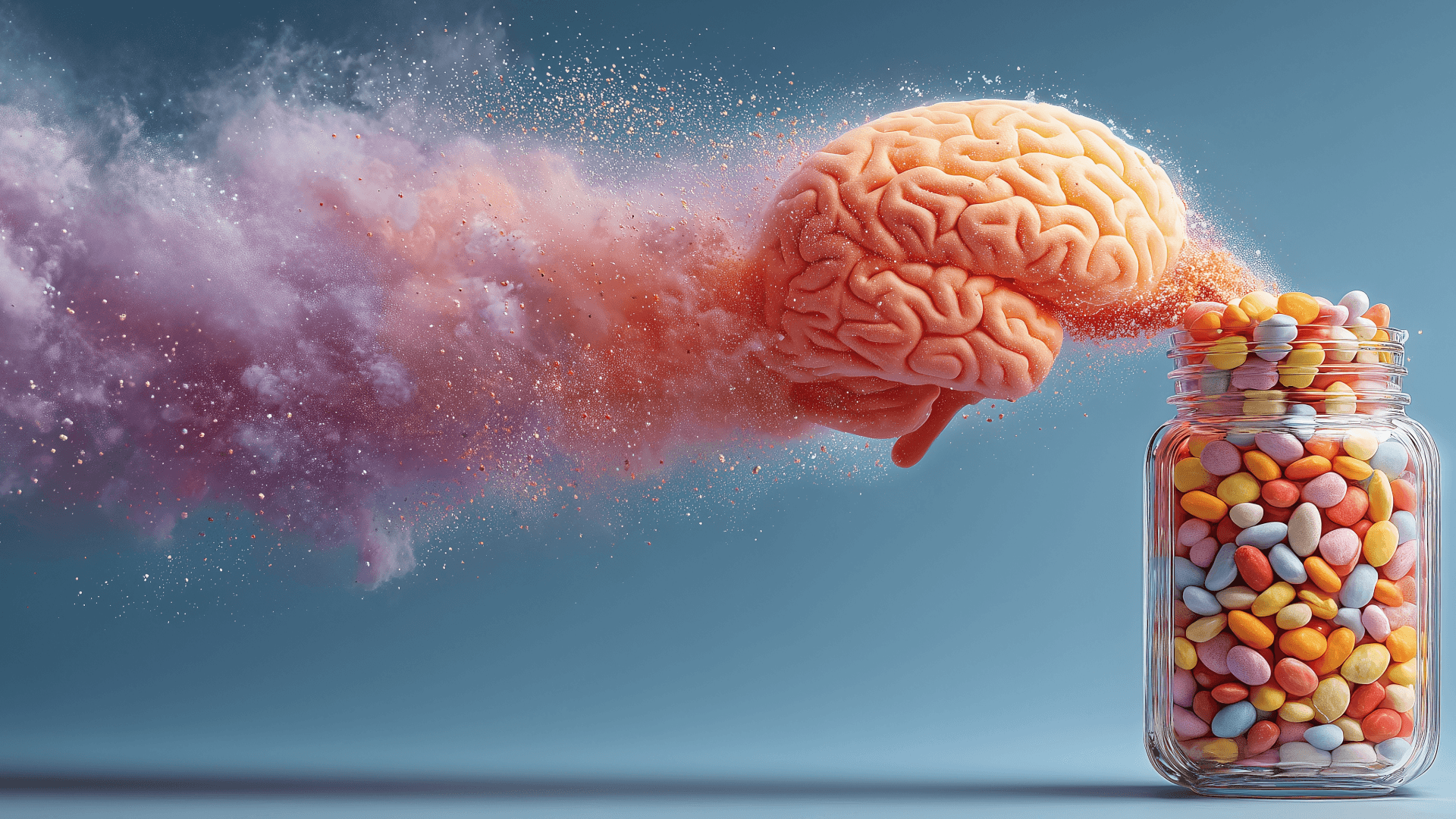
The Pull Shows Up First
It didn’t start as hunger.
That was the first thing that stood out.
There was no emptiness in the stomach.
No physical signal that food was required.
But something else appeared.
A direction.
Not Food — Specifically Sugar
It wasn’t a general thought of eating.
It narrowed quickly.
Something sweet.
Something fast.
Something immediate.
Not a meal.
A hit.
When It Happened
It followed the same point in the day.
After the work block.
After the drop in engagement.
After the shift from structured output to open space.
The body hadn’t changed much.
But the signal had.
The Misread
This is usually interpreted as:
hunger
low energy
lack of discipline
But sitting in it, none of those fully matched.
The body didn’t feel depleted.
Just… less driven.
The Timing Matters
It didn’t happen randomly.
It appeared after sustained cognitive effort.
Not physical work.
Thinking.
Structuring.
Deciding.
Holding multiple threads at once.
What the Body Was Doing
During that work block, even though there was no movement, the system was active:
sustained attention
continuous decision making
error checking
sequencing
All of which require energy.
Not muscular.
Neural.
The Shift After
When the task ended, the demand dropped.
But the system didn’t immediately settle.
There was a gap.
Lower stimulation.
Lower engagement.
Lower signal.
And into that gap, the pull appeared.
Why Sugar
The direction wasn’t random.
It pointed toward something that would:
act quickly
require no effort
change the internal state fast
Glucose does that.
From a biological standpoint, the brain relies heavily on glucose for function.
After sustained cognitive activity, local energy demand has been high.
Not necessarily depleted to dangerous levels.
But used.
The Signal Isn’t Precision
The body doesn’t always signal with accuracy.
It signals with direction.
It doesn’t say:
“Restore optimal neural glucose availability.”
It says:
“Get something that works. Now.”
So the system reaches for the fastest option it knows.
The Overlap With Stimulation
What’s interesting is how this overlaps with the earlier pattern.
The pull toward sugar appears at the same time as:
the drop in engagement
the search for stimulation
Which means it isn’t just about fuel.
It’s about state.
Sugar doesn’t just provide energy.
It shifts the internal signal quickly.
Sitting in It
Watching it without acting, something becomes clear.
The pull rises.
It feels specific.
Directed.
Then, if nothing is done…
it starts to fade.
Not immediately.
But noticeably.
What That Means
If it were pure energy deficit, it would continue to intensify.
But it doesn’t.
It peaks.
Then falls.
Which suggests the signal isn’t just biological need.
It’s a response to transition.
From high engagement → low engagement
From structured output → open space
The system is adjusting.
The Principle
The reach for sugar isn’t just about hunger.
It’s the system attempting to restore both:
energy
and signal intensity
And it will choose the fastest route available…
even if nothing is actually missing.
DAVID