

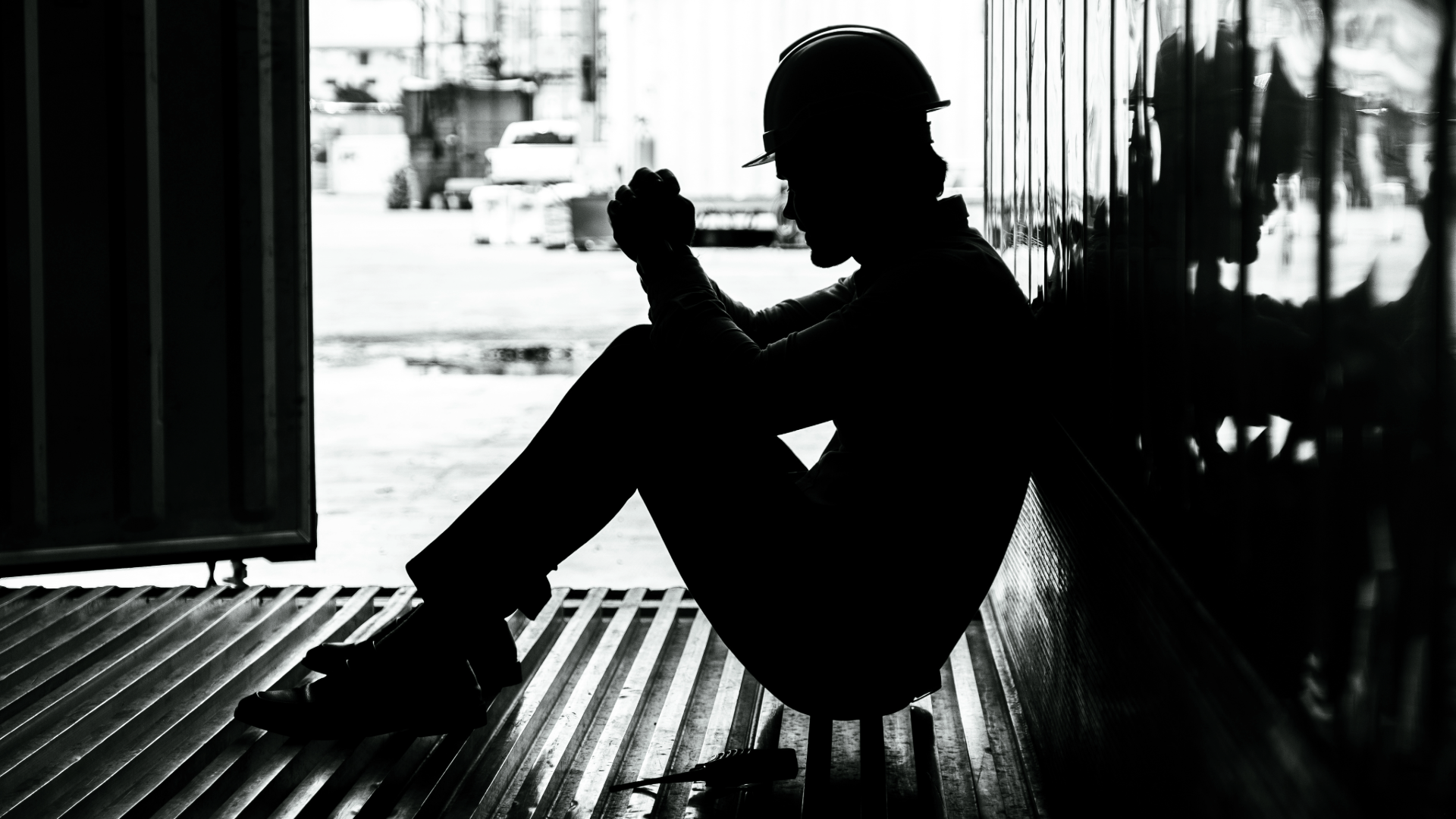
If you’d asked me at the time whether I was depressed, I would have said no.
I was still functioning.
Still showing up.
Still providing.
Still training.
Still “fine” by most external measures.
That’s why it went unnoticed — by others and by me.
What I was experiencing didn’t match the picture of depression I had in my head.
There was no constant sadness.
No crying spells.
No clear hopeless narrative.
Instead, there was something harder to name.
It felt like losing signal, not losing life
The best way I can describe it is this:
It felt like who I was kept turning the volume down, without my consent.
Not gone.
Just quieter.
Drive became harder to access.
Confidence stopped being automatic.
Motivation required effort instead of instinct.
I could still act — but it felt forced.
Like running a machine manually that used to run itself.
Rage without identity
One of the most frightening parts wasn’t low mood.
It was rage that didn’t feel like me.
Sudden flare-ups.
Hissy fits.
Explosions over small things.
Not calculated anger —
loss of regulation.
Afterwards, there was shame and confusion:
“Why did I react like that?”
This wasn’t a values problem.
It was a nervous system with no brakes.
Collapse moments no one sees
There were moments where the system just… stopped.
Lying on the floor.
Not dramatic.
Not suicidal in intent.
Just empty.
Like the body had hit a limit and powered down.
No words.
No thoughts.
No strategy.
Just a man whose internal resources were temporarily unavailable.
Responsibility didn’t disappear — it amplified the pressure
Here’s the part lists never capture.
I wasn’t isolated.
I wasn’t detached from life.
I had responsibility.
A partner.
Five kids.
A household.
Work.
Expectation.
Every demand landed on a system already at capacity.
Instead of motivation, responsibility became pressure.
Instead of purpose, it became weight.
And that created a dangerous internal contradiction:
I cared deeply —
but felt increasingly incapable.
The thought that scared me most
At the lowest points, a thought crept in that didn’t feel emotional — it felt logical.
“They’d be better off without me.”
That wasn’t despair.
It wasn’t a desire to die.
It was burdensomeness logic — a survival calculation made by a depleted system.
When a man loses the internal signal that says “I can handle this”, the brain starts asking the wrong questions.
Not because he wants to disappear —
but because he can’t see a path back to capacity.
That distinction matters.
Why this didn’t register as “depression”
I didn’t recognise this as depression because:
I still loved my family
I still cared about life
I still wanted things to improve
I still believed, abstractly, in the future
What was missing wasn’t hope.
It was physiological support.
The body couldn’t generate the internal state required to carry the load it was under.
That’s not a mindset issue.
That’s a system issue.
Why reassurance made it worse
Being told I was “fine” didn’t comfort me.
It isolated me.
Because if nothing was wrong:
why was I unravelling?
why was my identity slipping?
why was regulation failing?
The absence of explanation made me turn inward — and that’s where self-blame grows.
The truth, stated plainly
What I experienced wasn’t weakness.
It wasn’t failure.
It wasn’t a lack of gratitude or character.
It was a misfiring nervous and endocrine system trying to carry too much for too long.
And until you name it that way, nothing makes sense.
Why I’m writing this
I’m writing this because lists of symptoms don’t save men.
Recognition does.
If you’ve had rage you don’t recognise.
If you’ve shut down on the floor.
If responsibility feels heavier instead of motivating.
If you’re questioning who you are rather than what’s happening —
This isn’t a personal flaw.
It’s a system under strain.
And systems can be stabilised.
In the next article, I’ll document everything I tried before testosterone — because this wasn’t a shortcut, a whim, or a leap.
It was the last step after everything else failed.
DAVID
Leave a Comment: